There's something about Rick Perry that makes me uneasy- even as a conservative, a Christian, and a Texan for all but the last 3 years of my life. Even amongst those of us who don't buy into the theory of man-made global warming, the thought of a cleaner planet, sustainable power, and less urban smog seems more responsible than continuing to suck Tehrani Tea. When Perry says his job solution is 'drill, baby, drill!' in light of the BP disaster, he's not winning any votes- even if God told him to run.
I don't remember Perry's piety being touted like this during his years as governor. It's coming off as a political ploy, and that leaves a bitter taste in my mouth. As a fellow believer, I don't want to add fuel to his fire of persecution. But why wait until now to hold these highly publicized political prayer rallies? I think we all know.
But God allegedly told Herman Cain to run, as well! And He (God) very well could have told them both to do it so that Ron Paul would win the election.
I'm not sold on him yet, but if Cain has anything going for him it's humility, simplicity,
and grit. He knows what he knows, and he admits it when he doesn't. I
like to think that a president's success depends less upon his own
self-confidence and intellect than upon his ability to assemble and
listen to a cabinet of specialists more knowledgeable than himself.
The former Godfather's Pizza CEO is more American than he is Politician; that's why I like him. I think the USA is ready for a less narcissistic, simpler kind of leader- anything but another career politician. Cain's 9-9-9 plan is about as simple as you can get. Even if it would raise taxes for some people in states that already have their own sales tax, it's something that we citizens can understand. It's hard to find a loophole in something that basic- you know what you owe. The more you make and spend, the more you pay.
America is sick of complicated regulations that can't even be
explained by the pundits who birthed them. Health care, insurance,
taxes, and countless other financial regulations should be simplified to
the point that we don't need attorneys to interpret them, and can't pay
attorneys to seek out loopholes that give anyone an unfair advantage.
Now that Cain is ahead in the polls, we'll get to watch the
media try to reduce him from Godfather to delivery boy in the minds of the
masses. . . . if they can figure out how to do that in our day and age
without being dealt the race card. Being a conservative African American for whom the American Dream became a reality
gives Cain an advantage. Running against Obama, he would have the liberty to push certain buttons that no PC white candidate would dare touch.
If anything stands in Hermain Cain's way, it's the American voting mentality. Come election day, we seem to choke on fear and shortchange our ideals. Despite all our cheering for the underdog, we tend to follow the rest of the sheep off the proverbial cliff in voting for who we perceive to have the best chance of winning. It works like a run on a bank or a stock market sell-off. If everyone would base our vote on who we want in office, rather than who has raked in the most money, we might end up with a real winner in
the White House.
Cain isn't being flooded with donations, and that's a positive in my book. I'm probably not the only citizen repulsed by a political system that amounts to legal bribery. Permitting corporations to donate money to campaigns and put politicians in their pockets before they are even elected is
tragic. I hope more individuals will begin supporting candidates who get the least
amount of money from corporations and would enter the Oval Office with
the fewest unspoken obligations.
Article first published as Perry versus Cain 2012 on Technorati.
Saturday, October 15, 2011
Friday, October 14, 2011
Vegetarian, The Zone, Fruitopia, and the Rice Fast
It's been a crazy week of flip flopping among the pundits in Washington regarding food. We have the first lady trying to set a world record to raise awareness for childhood obesity, and just days later the government goes soft, refusing to castrate Tony the Tiger.
Ms. Obama seems all about health on camera, but Paula Deen ratted her out. She apparently got her gnosh on during the commercials. Makes you wonder what the White House chef is serving up these days.
I guess it's one step at a time. If the history of my own relationship with food proves anything, it's that fitness is a journey rather than a destination. Exploring my curiosities has made it a roller coaster of an adventure, from mending my unhealthy relationship with food in my teens, to the trials of The Abs and The Warrior diets.
I didn't give vegetarianism more than a passive pondering until Jenn and I were planning to celebrate our 1st anniversary by exploring Portland, OR on foot. She's never been a vegan purist, but lived largely on produce by default until I came along. I don't remember whose idea it was, but vegetarianism was an eating -ism I'd never tried, and that alone made me willing. The fact that my wife was eager to participate made it that much more enticing, since my evolving menu had been known to induce rolling eyes and exasperation on her part.
We decided ahead of time to go at least a month without meat after our trip, seeing it as a way to detox from all of the restaurant food eaten during our tasty tour of Portland. It could possibly speed up our financial recovery, too . . . I mean, spinach is cheaper than steak, right?
On one of our first nights in the trendy city, we went to a Living Room Theater and watched the documentary Food Inc. It points out a lot of ominous disease-breeding/animal-abusing/migrant worker oppressing/poison-spreading aspects of our nation's food system. The rhetoric was good motivation for someone already planning to shun meat for a time- so much, in fact, that I got started then and there.
Portland is a very liberal, organic, Petavegan-friendly kind of city. Almost all of the food joints we went to had meatless lasagna, veggie burgers, tofu tips, and other specially designed 'plates' to appease the herbivores- even Deschutes and Rock Bottom, a couple of the coolest little microbreweries on the planet.
I soon found myself ordering meat-free meals, and they were delicious! The early start was enjoyable, and I continued to handle our month of meatlessness well after returning home. Dagwood salads with lettuce, tomatoes, almonds, carrots, spinach, feta cheese, jalapeños, sprouts, and more helped see me through.
The leafy-greens and colorful salad aspect of vegetarian life was most healthy, but there was a darker side. I think any man my size would asphyxiate if he tried to get enough calories from leaves alone. The addictive and calorie-dense bread, cracker, cookie, rice, and cake side of things still qualifies as vegetarian. I could feel myself getting softer as muscles seemingly atrophied for lack of protein. I was more hungry more often, and the starchy foods ranking high on the glycemic index were being stashed at my waistline. I packing on pounds like Kobayashi, but felt myself growing weaker and softer. After over-training finally caught up with me and I had to stop running, my body felt even more inclined to store the starches.
'But what about beans?' you might scream- that seems to be many a vegetarian's answer to lack of protein. The truth is, beans have considerably more starch than they do protein. To get enough protein from legumes and tofu, you have to overdose on calories which, unless you have the metabolism of a hummingbird, usually results in weight gain. Not to mention the dutch oven effect. A married man's toe-steaming methane emissions under the covers are hardly appreciated.
Atkins was all the rage back then. There was a lo-carb version of everything in groceryland. Despite that fact, I never bought into the idea that going carnivorous to such a degree could possibly be sustainable or healthy in the long-term. I was more than ready for meat again, practically drooling at the thought of a ribeye, but wanted something more balanced than toxic ketosis. About to get back into weightlifting, I was on the hunt for a balanced, scientifically sound scheme that would optimize energy for exercise and protein for muscle development.
After another round of research I entered The Zone. It's a very interesting book, with sensible theory promoting a strictly measured, but wisely balanced diet. I also picked up Stuart McRobert's reference manual on bodybuilding. Together, my new set of references made for a few months of enjoyable progress. The carefully measured protein to carb ratios kept me in The Zone, while I meticulously recorded weight, reps, and sets in a raw circuit of fundamental compound exercises like the squat, deadlift, and bench press.
I felt pretty good overall, mentally and physically. As I got stronger, chronic aches like my rotator cuff and the periformis/sciatica that my running had incurred seemed to disappear. I could eat just about anything, which was liberating to a point, but portions were tightly controlled.
I put on around 15 pounds of muscle, but it never seemed to poke through the wrapping paper quite like Rambo's. I felt stronger but slower, my walk became a lumber. As a beefcake, I missed feeling light, lean, and quick on my feet. The constant label-reading and tedious fat, carb, and protein gram-counting became tedious, despite the pre-calculated recipes I'd developed that helped streamline snack time. I couldn't try anything new without another number-crunching session.
One evening I pushed the limits with a little too much weight on the squat, resulting in bad form, and my back gave me trouble for weeks. Just when I thought it was better, the slightest twist would bring all of the pain rushing back for days. I needed an extended break, and took it during the busyness of moving from the Little Rock area to upstate New York.
The physical transplant uprooted my routine completely. I was without a gym, my fully stocked fridge, and even my wife (for a couple of weeks.) Without the right combination of proximity and price, I couldn't find a gym worth joining. Over the next few months my hard-earned Arkansas muscle began to soften and sag.
For the first time since I was 13 years old I found myself over 200lbs and more interested in shedding excess weight than in general fitness. That's when I undertook a week long fruit-fast. It worked nicely in terms of slimming down, and provided plenty of vitamins and fiber, but seemed too sugary to do long-term without rotting your teeth out.
For my second phase of slenderization, I switched to a rice fast. Simple and effective, I was soon back down to my fighting weight, floating around 180lbs. I maintained that weight for some time as a mostly-whole-foods omnivore, intentionally conscious of portion sizes, but avoiding the hassle of calorie counting. It was probably a year later that I came across a revelation that would turn everything I thought I knew about healthy eating upside down and expose the 'con' in conventional wisdom.
Coming soon. . .
Article first published as Vegetarian, The Zone, Fruitopia, and the Rice Fast on Technorati.
Ms. Obama seems all about health on camera, but Paula Deen ratted her out. She apparently got her gnosh on during the commercials. Makes you wonder what the White House chef is serving up these days.
I guess it's one step at a time. If the history of my own relationship with food proves anything, it's that fitness is a journey rather than a destination. Exploring my curiosities has made it a roller coaster of an adventure, from mending my unhealthy relationship with food in my teens, to the trials of The Abs and The Warrior diets.
I didn't give vegetarianism more than a passive pondering until Jenn and I were planning to celebrate our 1st anniversary by exploring Portland, OR on foot. She's never been a vegan purist, but lived largely on produce by default until I came along. I don't remember whose idea it was, but vegetarianism was an eating -ism I'd never tried, and that alone made me willing. The fact that my wife was eager to participate made it that much more enticing, since my evolving menu had been known to induce rolling eyes and exasperation on her part.
We decided ahead of time to go at least a month without meat after our trip, seeing it as a way to detox from all of the restaurant food eaten during our tasty tour of Portland. It could possibly speed up our financial recovery, too . . . I mean, spinach is cheaper than steak, right?
On one of our first nights in the trendy city, we went to a Living Room Theater and watched the documentary Food Inc. It points out a lot of ominous disease-breeding/animal-abusing/migrant worker oppressing/poison-spreading aspects of our nation's food system. The rhetoric was good motivation for someone already planning to shun meat for a time- so much, in fact, that I got started then and there.
Portland is a very liberal, organic, Petavegan-friendly kind of city. Almost all of the food joints we went to had meatless lasagna, veggie burgers, tofu tips, and other specially designed 'plates' to appease the herbivores- even Deschutes and Rock Bottom, a couple of the coolest little microbreweries on the planet.
I soon found myself ordering meat-free meals, and they were delicious! The early start was enjoyable, and I continued to handle our month of meatlessness well after returning home. Dagwood salads with lettuce, tomatoes, almonds, carrots, spinach, feta cheese, jalapeños, sprouts, and more helped see me through.
The leafy-greens and colorful salad aspect of vegetarian life was most healthy, but there was a darker side. I think any man my size would asphyxiate if he tried to get enough calories from leaves alone. The addictive and calorie-dense bread, cracker, cookie, rice, and cake side of things still qualifies as vegetarian. I could feel myself getting softer as muscles seemingly atrophied for lack of protein. I was more hungry more often, and the starchy foods ranking high on the glycemic index were being stashed at my waistline. I packing on pounds like Kobayashi, but felt myself growing weaker and softer. After over-training finally caught up with me and I had to stop running, my body felt even more inclined to store the starches.
'But what about beans?' you might scream- that seems to be many a vegetarian's answer to lack of protein. The truth is, beans have considerably more starch than they do protein. To get enough protein from legumes and tofu, you have to overdose on calories which, unless you have the metabolism of a hummingbird, usually results in weight gain. Not to mention the dutch oven effect. A married man's toe-steaming methane emissions under the covers are hardly appreciated.
Atkins was all the rage back then. There was a lo-carb version of everything in groceryland. Despite that fact, I never bought into the idea that going carnivorous to such a degree could possibly be sustainable or healthy in the long-term. I was more than ready for meat again, practically drooling at the thought of a ribeye, but wanted something more balanced than toxic ketosis. About to get back into weightlifting, I was on the hunt for a balanced, scientifically sound scheme that would optimize energy for exercise and protein for muscle development.
After another round of research I entered The Zone. It's a very interesting book, with sensible theory promoting a strictly measured, but wisely balanced diet. I also picked up Stuart McRobert's reference manual on bodybuilding. Together, my new set of references made for a few months of enjoyable progress. The carefully measured protein to carb ratios kept me in The Zone, while I meticulously recorded weight, reps, and sets in a raw circuit of fundamental compound exercises like the squat, deadlift, and bench press.
I felt pretty good overall, mentally and physically. As I got stronger, chronic aches like my rotator cuff and the periformis/sciatica that my running had incurred seemed to disappear. I could eat just about anything, which was liberating to a point, but portions were tightly controlled.
I put on around 15 pounds of muscle, but it never seemed to poke through the wrapping paper quite like Rambo's. I felt stronger but slower, my walk became a lumber. As a beefcake, I missed feeling light, lean, and quick on my feet. The constant label-reading and tedious fat, carb, and protein gram-counting became tedious, despite the pre-calculated recipes I'd developed that helped streamline snack time. I couldn't try anything new without another number-crunching session.
One evening I pushed the limits with a little too much weight on the squat, resulting in bad form, and my back gave me trouble for weeks. Just when I thought it was better, the slightest twist would bring all of the pain rushing back for days. I needed an extended break, and took it during the busyness of moving from the Little Rock area to upstate New York.
The physical transplant uprooted my routine completely. I was without a gym, my fully stocked fridge, and even my wife (for a couple of weeks.) Without the right combination of proximity and price, I couldn't find a gym worth joining. Over the next few months my hard-earned Arkansas muscle began to soften and sag.
For the first time since I was 13 years old I found myself over 200lbs and more interested in shedding excess weight than in general fitness. That's when I undertook a week long fruit-fast. It worked nicely in terms of slimming down, and provided plenty of vitamins and fiber, but seemed too sugary to do long-term without rotting your teeth out.
For my second phase of slenderization, I switched to a rice fast. Simple and effective, I was soon back down to my fighting weight, floating around 180lbs. I maintained that weight for some time as a mostly-whole-foods omnivore, intentionally conscious of portion sizes, but avoiding the hassle of calorie counting. It was probably a year later that I came across a revelation that would turn everything I thought I knew about healthy eating upside down and expose the 'con' in conventional wisdom.
Coming soon. . .
Article first published as Vegetarian, The Zone, Fruitopia, and the Rice Fast on Technorati.
Friday, October 7, 2011
CW Nutrition: The Abs Diet & The Warrior Diet
(Note: See Speaking of Food for an introduction)
About six years ago my first taste of a mainstream diet plan began at a point in health where I wasn't necessarily looking to lose weight, but would consider anything that might healthily help me look a little more like Michaelangelo's statue of David. After some research (aka Googling for on-line reviews) I settled for the Abs Diet.
Yes, it makes the stereotypical, grandiose promises of X pounds in Y days, but the book is a healthy read. It's principals are not as shallow as the glossy title and advertising suggest, even if the macho lingo seems directed toward a pack of jocks in heat. The text provides a sensible, well-rounded diet and exercise plan that one could easily live by indefinitely. But you have to buy into conventional (food pyramid) wisdom.
When it comes to the USDA's food pyramid, the main reference point for most food-related CW, a "balanced" diet is more politically correct than it is healthy. The United States Department of Agriculture is lobbied by all of the livestock and plant farmers under its umbrella and still gets to tell us what we should eat. Smells like a conflict of interest if there ever was one.
An overwhelming majority of conventional nutritional guidelines are based on studies funded by the very industries that produce the foods. "Got Milk?" for instance. . . or this interesting story about how pomegranates became a superfood.
In our consumer-driven society all a producer has to do is dig until they find a scientist who can find a positive aspect to their product. Then they can relentlessly promote and advertise that slice of optimism until it becomes CW, or maybe even a pop culture craze (like Acai berries now in everything from pills to tea.) Clever marketing can build a castle of fortune on a grain of truth.
There was a time when even cigarettes were healthy. Interestingly enough, the government is suing Pom Wonderful for misleading the common man. Sorghum bran may be more scientifically justifiable as rich in antioxidants, but it isn't sugary, wouldn't sell in a sensuously lumpy bottle, and just doesn't sound as chic.
Since commercial-based CW is hardly reliable, and I've been full of questions ever since I picked up my first Curious George book, I eventually became interested in less conventional approaches to nutrition. I don't remember how I first got wind of it, but I decided to test The Warrior Diet.
The book was actually one of the most dubious I've read, with very little in the way of scientific or common-sensical merit. The fact that the author (Ori Hofmekler) had previously worked for distasteful publications and had a sinister monkey look on his face in all of the book's exercise illustrations didn't help his credibility with me. He wasn't my kind of role model in any dimension.
His theory goes something like this- cave men and Spartans must have never eaten breakfast since Captain Crunch and Eggos weren't around back then. They would travel long distances by foot on a daily basis, looking to spear their dinners. By the evening they'd kill a deer or a turkey, then cook it over an open fire and totally pig out before slipping into restful sleep. . . . so that must be how we are meant to eat.
Basically, fast all day then make up for it during a 4-hour no-holds-barred feeding window every evening. There were a few guidelines for stuffing your face: lead off with leafy greens to make a bed for all the meat you can manage, and only then top off your stomach with sweets (if you must.)
These are the guidelines quoted from the Warrior Diet website:
I handled the fasting part handily, but ingesting enough calories within 4 hours to make up for it proved a challenge. You know that cranial haze that you get after a big thanksgiving dinner? I was dealing with it nightly. That kind of mental fog is the last thing a small-time poet with a full-time job needs during his off-hours. Working out after a 20 hour fast wasn't working for me either. My calves started cramping at night. . . . like they were trying to eat themselves.
Without the intermittent insulin surges that come with the bad advice to eat 5-6 mini-meals a day and "stoke the metabolic fire" (per the CW in the Abs Diet) I had exceptional mental clarity during the day, but felt physically sluggish. Without a whole lot of excess weight to lose, I shed a few pounds and then plateaued.
I don't think Ori totally missed the mark. Going "low on the food chain" is good advice. There's solid research that I'll get to later suggesting that exercise on an empty stomach can be very effective, and that fasting is a healthy practice. It's just that what we eat is much more important than his book suggests, and trying to stuff an entire day's calories into 4 hours is mind numbing. It gets old fast. . . . unless you enjoy feeling like a zombie that just swallowed a cinder block. Vampires and werewolves are more in-vogue anyway.
Needless to say, I didn't last long as a Warrior, but moved on to a plan grounded in more solid research- coming soon. . .
About six years ago my first taste of a mainstream diet plan began at a point in health where I wasn't necessarily looking to lose weight, but would consider anything that might healthily help me look a little more like Michaelangelo's statue of David. After some research (aka Googling for on-line reviews) I settled for the Abs Diet.
Yes, it makes the stereotypical, grandiose promises of X pounds in Y days, but the book is a healthy read. It's principals are not as shallow as the glossy title and advertising suggest, even if the macho lingo seems directed toward a pack of jocks in heat. The text provides a sensible, well-rounded diet and exercise plan that one could easily live by indefinitely. But you have to buy into conventional (food pyramid) wisdom.
When it comes to the USDA's food pyramid, the main reference point for most food-related CW, a "balanced" diet is more politically correct than it is healthy. The United States Department of Agriculture is lobbied by all of the livestock and plant farmers under its umbrella and still gets to tell us what we should eat. Smells like a conflict of interest if there ever was one.
An overwhelming majority of conventional nutritional guidelines are based on studies funded by the very industries that produce the foods. "Got Milk?" for instance. . . or this interesting story about how pomegranates became a superfood.
In our consumer-driven society all a producer has to do is dig until they find a scientist who can find a positive aspect to their product. Then they can relentlessly promote and advertise that slice of optimism until it becomes CW, or maybe even a pop culture craze (like Acai berries now in everything from pills to tea.) Clever marketing can build a castle of fortune on a grain of truth.
There was a time when even cigarettes were healthy. Interestingly enough, the government is suing Pom Wonderful for misleading the common man. Sorghum bran may be more scientifically justifiable as rich in antioxidants, but it isn't sugary, wouldn't sell in a sensuously lumpy bottle, and just doesn't sound as chic.
Since commercial-based CW is hardly reliable, and I've been full of questions ever since I picked up my first Curious George book, I eventually became interested in less conventional approaches to nutrition. I don't remember how I first got wind of it, but I decided to test The Warrior Diet.
The book was actually one of the most dubious I've read, with very little in the way of scientific or common-sensical merit. The fact that the author (Ori Hofmekler) had previously worked for distasteful publications and had a sinister monkey look on his face in all of the book's exercise illustrations didn't help his credibility with me. He wasn't my kind of role model in any dimension.
His theory goes something like this- cave men and Spartans must have never eaten breakfast since Captain Crunch and Eggos weren't around back then. They would travel long distances by foot on a daily basis, looking to spear their dinners. By the evening they'd kill a deer or a turkey, then cook it over an open fire and totally pig out before slipping into restful sleep. . . . so that must be how we are meant to eat.
Basically, fast all day then make up for it during a 4-hour no-holds-barred feeding window every evening. There were a few guidelines for stuffing your face: lead off with leafy greens to make a bed for all the meat you can manage, and only then top off your stomach with sweets (if you must.)
These are the guidelines quoted from the Warrior Diet website:
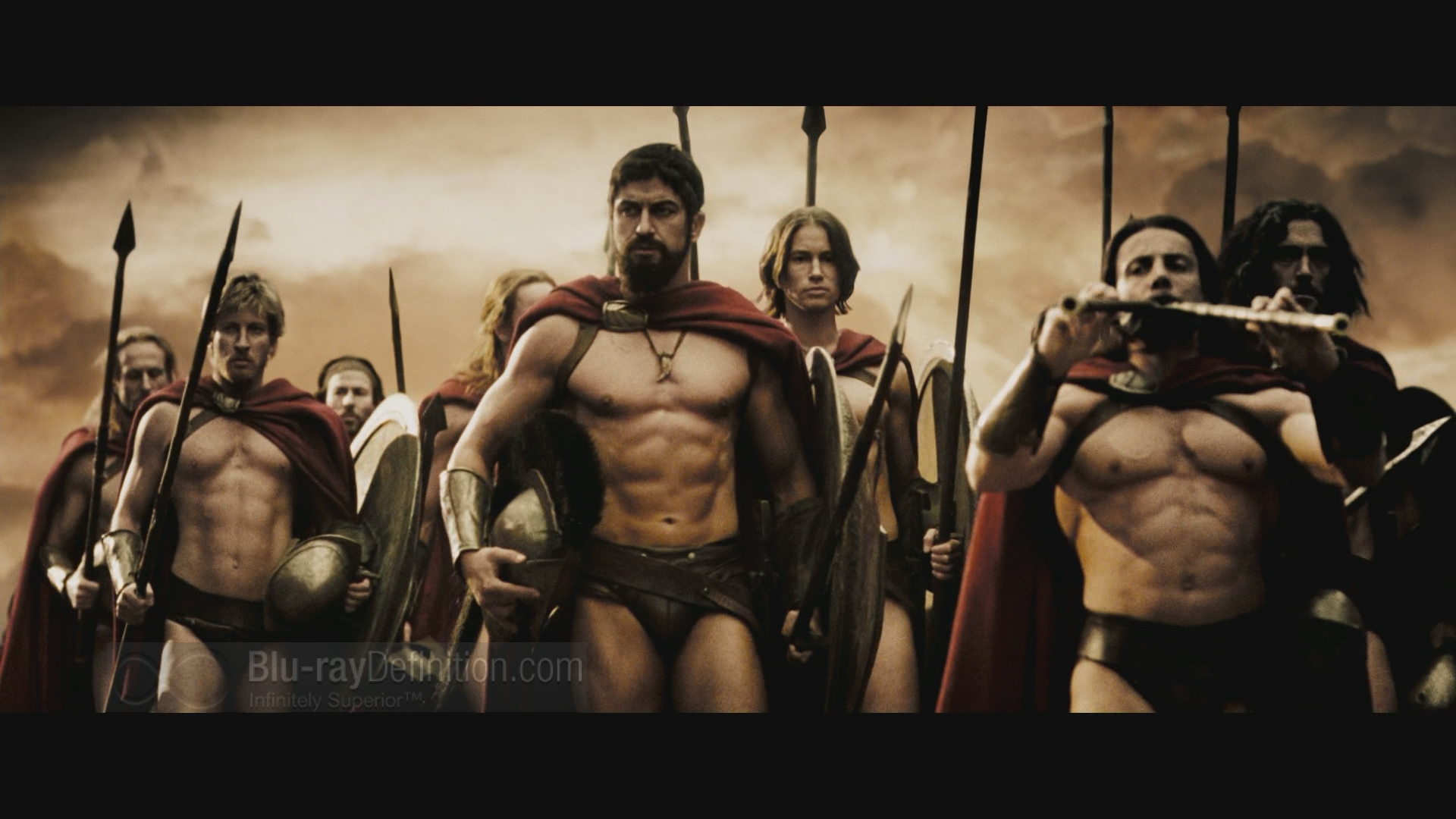
The thought of giving my willpower a daily 20-hour workout while looking forward to indulging carelessly for 4 hours, all to look like a character from The 300 sounded appealing, so I gave it a try.1. Eat One Main Meal at Night
There is evidence that humans are nocturnal eaters, inherently programmed for undereating and toiling during the day, followed by overeating and relaxing at night.2. Go Low on the Food Chain
Researchers believe that the human genome is programmed for a late Paleolithic world. As hunter/gatherers we're better adapted to pre-agricultural food– i.e. chemical-free fruit, vegetables, roots, sprouted legumes, nuts, seeds, fertile eggs, marine food (wild catch), and dairy from grass fed animals.3. Exercise While Undereating
It has been established that we are inherently carrying survival mechanisms that benefit us when triggered by physical or nutritional stress such as exercise or undereating. Combining exercise with undereating will amplify the beneficial mechanisms of both – increasing our ability to utilize energy, improve strength and resist fatigue.
I handled the fasting part handily, but ingesting enough calories within 4 hours to make up for it proved a challenge. You know that cranial haze that you get after a big thanksgiving dinner? I was dealing with it nightly. That kind of mental fog is the last thing a small-time poet with a full-time job needs during his off-hours. Working out after a 20 hour fast wasn't working for me either. My calves started cramping at night. . . . like they were trying to eat themselves.
Without the intermittent insulin surges that come with the bad advice to eat 5-6 mini-meals a day and "stoke the metabolic fire" (per the CW in the Abs Diet) I had exceptional mental clarity during the day, but felt physically sluggish. Without a whole lot of excess weight to lose, I shed a few pounds and then plateaued.
I don't think Ori totally missed the mark. Going "low on the food chain" is good advice. There's solid research that I'll get to later suggesting that exercise on an empty stomach can be very effective, and that fasting is a healthy practice. It's just that what we eat is much more important than his book suggests, and trying to stuff an entire day's calories into 4 hours is mind numbing. It gets old fast. . . . unless you enjoy feeling like a zombie that just swallowed a cinder block. Vampires and werewolves are more in-vogue anyway.
Needless to say, I didn't last long as a Warrior, but moved on to a plan grounded in more solid research- coming soon. . .
Monday, October 3, 2011
Sunday Blurb
God says "seek My face." In modern terms I see that as "look Me in the eye." I think He's saying, "Don't talk to me over your shoulder while focused on the things of this world. I want your full attention, your listening ear, your open heart. I want more than the shallow little prayers you throw over your shoulder when you're in a pinch. I want more than your Christmas list. I know what you want better than you do. Listen to Me for a change. I want a relationship with you. Stop engaging in anything that makes you squirm at the thought of sitting down face-to-face with Me." Thanks to Rev. "The Bull" Earley for bringing it Sunday!
Subscribe to:
Posts (Atom)